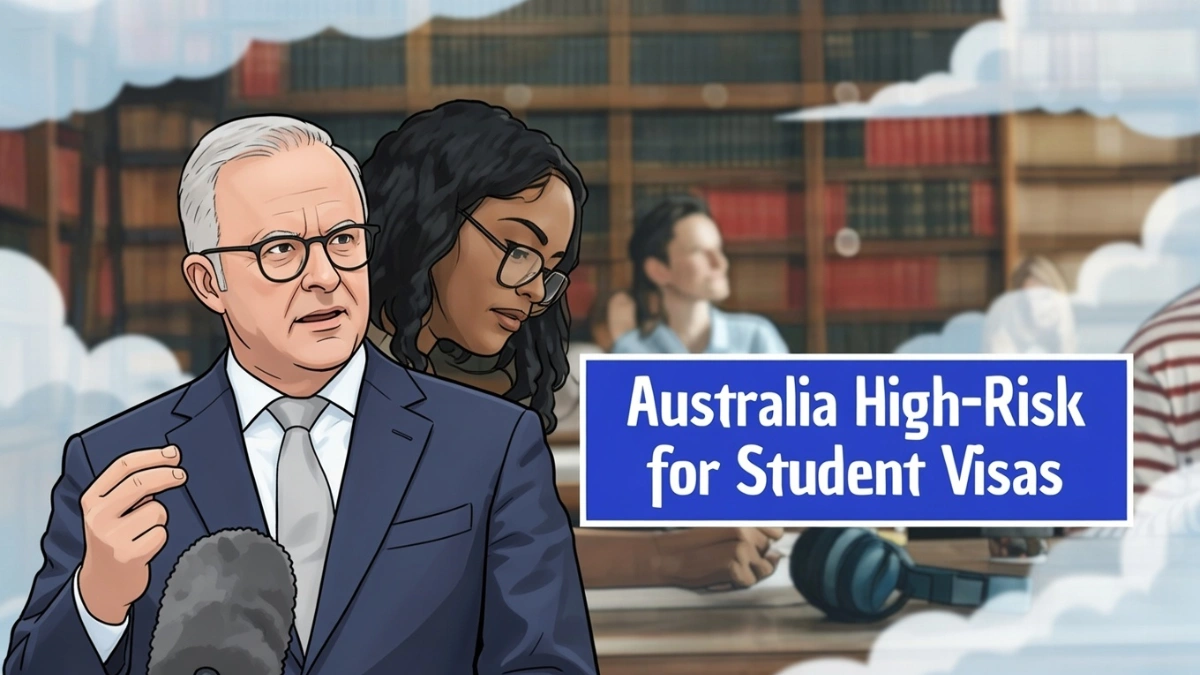
Australia Flags India as High-Risk for Student Visas: Australia’s international education landscape is undergoing a major shift as Indian student visa applicants face tighter scrutiny in 2026. Australia has reclassified India into a higher immigration risk category for student visas, a move that is already reshaping application outcomes, documentation standards, and approval timelines.
With India being one of Australia’s largest sources of international students, the change has sparked concern among applicants, parents, and education consultants alike.
Why Australia Reclassified India as High-Risk
The decision is linked to rising concerns around visa misuse, non-genuine student applications, and post-study compliance. Australian authorities have indicated that a growing number of applications did not align with genuine study intentions, prompting stricter risk assessments.
The policy shift is overseen by the Australian Department of Home Affairs, which regularly reviews country risk profiles based on visa compliance data, refusal rates, and overstay trends.
What High-Risk Classification Actually Means
Being labelled high-risk does not mean student visas are banned or halted. However, it does mean applications from India will face deeper scrutiny. Officers may request more financial evidence, stronger proof of academic intent, and clearer post-study plans.
Applicants should also expect longer processing times and a higher likelihood of interviews or follow-up questions compared to previous years.
Impact on Visa Approval Rates in 2026
Early indicators suggest that approval rates for Indian students may tighten in 2026, particularly for applicants targeting lesser-known institutions or courses with weak academic progression. Universities and colleges may also apply stricter internal screening before issuing Confirmation of Enrolment documents.
This shift places greater responsibility on students to present well-documented and credible applications from the outset.
Financial Proof and Documentation Changes
One of the biggest impacts is on financial requirements. Students may need to show higher levels of savings, longer financial history, and clearer sources of funds. Education loans, sponsor income, and expense planning are likely to be examined more closely.
Incomplete or inconsistent financial documentation could lead to faster refusals under the new risk framework.
How This Affects Universities and Education Agents
Australian institutions are also adapting to the change. Some universities may limit offers from certain regions or courses, while registered migration agents are revising their application strategies to reduce refusal risk.
Reputable institutions with strong compliance records are expected to fare better under the updated system.
What Indian Students Should Do Differently in 2026
Preparation is now more critical than ever. Students should choose courses that clearly align with their academic background, career goals, and long-term plans. Strong Statements of Purpose, genuine intent explanations, and realistic post-study outcomes are essential.
Applying early, double-checking documentation, and avoiding shortcuts can significantly improve approval chances under the stricter regime.
Is Australia Still a Viable Study Destination
Despite the changes, Australia remains one of the world’s top destinations for international education. Degrees from Australian institutions continue to carry global recognition, and post-study work opportunities still attract thousands of students annually.
The new classification signals tighter control, not closure. Well-prepared and genuine students can still succeed.
Conclusion: Australia’s reclassification of India as high-risk for student visas marks a clear policy tightening ahead of 2026. While the change raises the bar for applicants, it does not eliminate opportunities. Students who focus on strong documentation, genuine intent, and realistic planning can still pursue Australian education successfully in the evolving visa environment.
Disclaimer: This article is for informational purposes only and does not constitute immigration or legal advice. Student visa rules, risk classifications, and eligibility criteria may change at any time. Applicants should consult official Australian government sources or registered migration professionals for the most accurate and personalised guidance.